

In brief
- Top Trump admin officials have appeared to criticize Coinbase for pulling support from the crypto market structure bill.
- Meanwhile, World Liberty Financial—co-founded by President Trump—is firmly supporting Coinbase’s approach to the bill.
- World Liberty, like Coinbase, has much riding on shifting language in the legislation regarding stablecoin rewards.
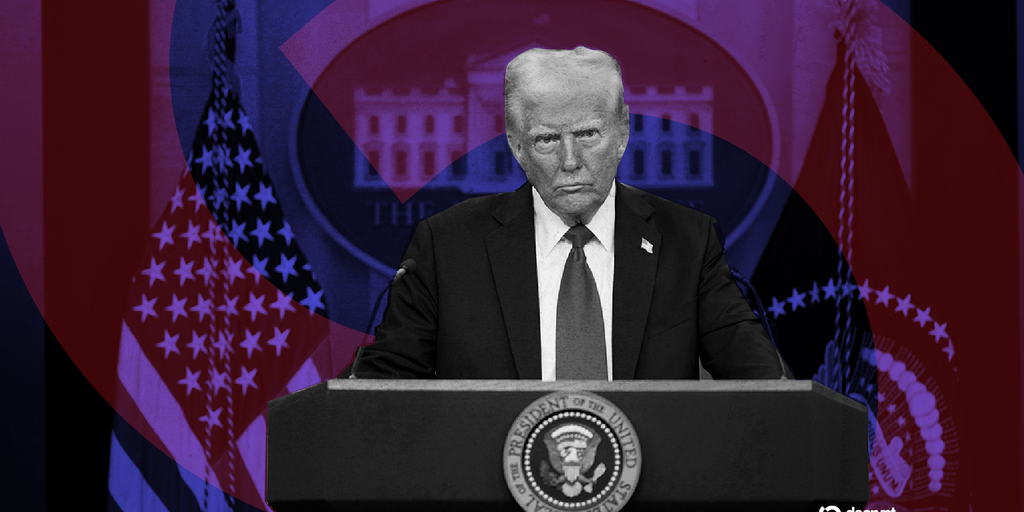
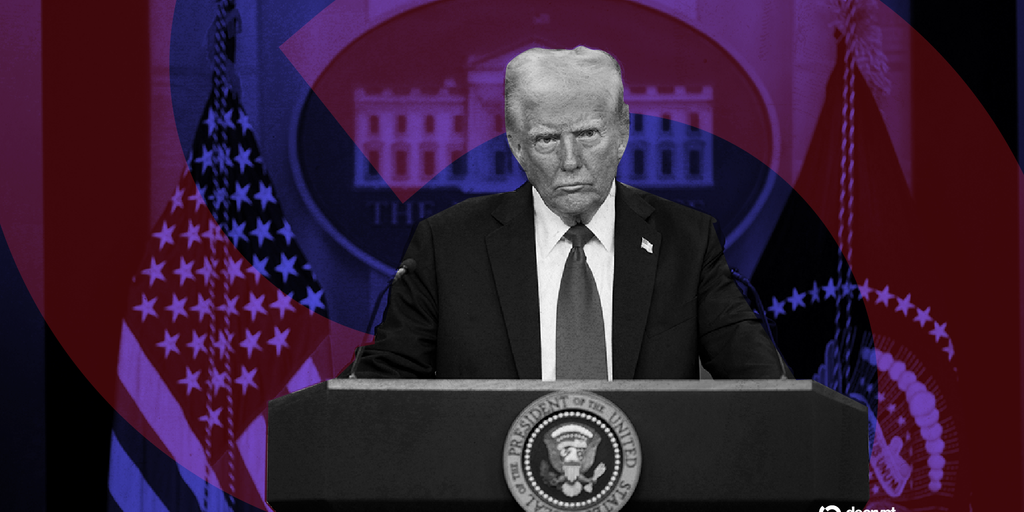
As the crypto industry’s most coveted piece of legislation stalls in Congress, the Donald Trump administration has pursued aggressive tactics to try and get the bill back on track—including by appearing to take shots at Coinbase, the industry giant that walked away from the bill last month.
In recent weeks, U.S. Treasury Secretary Scott Bessent has repeatedly denigrated crypto executives like Coinbase CEO Brian Armstrong who say a crypto market structure bill should be rejected if its terms are non-ideal. Bessent has labeled such executives “nihilists” and “recalcitrant actors.” He’s even said they should leave America and “move to El Salvador.”
But when Armstrong attended a swanky crypto conference at Mar-a-Lago last week, the Trump family and its business partners had far kinder words for the Coinbase founder’s political tactics.
“We applaud you,” Zach Witkoff, CEO of the Trump family’s crypto company World Liberty Financial, told Armstrong at the event, speaking of the market structure bill.
During an on-stage interview at the World Liberty Forum about how Coinbase has navigated the bill process, Witkoff could hardly have been more supportive.
“We’re super aligned,” Witkoff told Armstrong.
Coinbase walked away from the crypto bill last month, largely due to evolving language in the legislation concerning stablecoin rewards. Stablecoins are crypto tokens typically pegged to the value of the U.S. dollar. Coinbase currently offers users yield, essentially interest payments and typically around 4%, on holdings of the popular stablecoin USDC, which the company co-created. Banks have pushed to outlaw such programs, citing concerns about how they could make traditional, low-yield bank accounts less attractive.
World Liberty has its own stablecoin, USD1, which is central to the company’s future ambitions. The firm recently rolled out an app, WLFI Markets, that allows users to earn rewards on their USD1 holdings, and also lend and borrow against those compounding funds. World Liberty just debuted a related platform that enables AI agents to zip around the internet, spending USD1 autonomously to complete tasks and make investments.
The company also plans to soon release a consumer-facing, “Venmo”-like app that will allow users to swap their stablecoin holdings for various fiat currencies and send them abroad. Key to this intricate web of functionalities is the promise that a World Liberty user can continue to earn rewards on their USD1, even as they use the tokens to complete various tasks.
It’s perhaps no surprise, then, why World Liberty is following Coinbase’s lead during the ongoing battle in Washington over stablecoin rewards.
“We are very much aligned with their way of thinking about this,” World Liberty co-founder Zak Folkman told Decrypt, speaking of Coinbase. “Brian’s been doing such a great job.”
But Coinbase’s maneuvering of the crypto market structure bill has not been without controversy. When Brian Armstrong announced last month that his company was pulling support for the legislation, the move caught Congress—and the White House—completely off-guard. Trump administration officials were outraged by the move, which they had not been warned about ahead of time, sources familiar with the matter told Decrypt.
The about-face prompted Republican lawmakers to pull a key Senate vote on the bill scheduled for the following day. It has yet to be rescheduled, and many crypto policy leaders in Washington are now openly doubting whether the bill will pass before midterm season grinds Congress to a halt.
The Trump administration, meanwhile, has declared passage of the bill by spring as one of its top legislative priorities. Despite its frustrations with Coinbase, the White House has in recent weeks held a series of meetings attended by the company’s executives—along with representatives of other crypto companies and the banking industry—to reach an agreement on stablecoin yield. Coinbase is simply too large to box out of such negotiations, attendees of the meetings told Decrypt.
Should the market structure bill fall apart, stablecoin rewards offered by Coinbase, World Liberty, and others would presumably remain legal under language passed in the GENIUS Act last year.
Since President Trump’s return to power, many in Washington have closely scrutinized World Liberty, which was co-founded by the president in late 2024. But the company’s operators argue they are completely independent from the White House—as demonstrated by the apparent ongoing split over Coinbase and the market structure bill.
“The reality is that we are as beholden to what happens in Washington as anybody else,” Folkman said. “We’re on the outside here, watching this whole thing unfold the same way everybody else is.”
Daily Debrief Newsletter
Start every day with the top news stories right now, plus original features, a podcast, videos and more.